
In my early thirties (that’s 30 years ago), I made a phone call I would think about for weeks afterwards.
I rang a friend to tell him exactly how much he had let me down. I had years of evidence, plenty of frustration and, as far as I was concerned, every reason to be angry.
What I hadn’t done was ask him what had happened.
We had been friends since school and had always kept in touch. Time together was great, but making arrangements with him could be frustrating.
Sometimes he would cancel just as I was leaving for wherever we had agreed to meet. Other times, he would turn up two hours late. These weren’t isolated incidents. They had become a familiar part of the friendship.
I was irritated, but for years I said nothing.
Then came the day I finally did.
I had bust a gut to get to the venue. I was running late myself, so when I arrived and he wasn’t there, I called him.
No answer.
I sent a text and heard nothing. Eventually, a message came through saying he couldn’t make it.
I could feel my blood boiling.
When I called again, he answered, and I didn’t give him a chance to speak. Years of frustration came pouring out. Every cancellation, every time he had kept me waiting, every occasion I had rearranged things only to be let down.
But as I went on, his silence began to unnerve me.
Eventually, I stopped.
“So, you don’t have anything to say to me?”
I was expecting a defence. An excuse. Perhaps another apology I didn’t particularly want to hear.
He said:
“I’m so sorry. My brother has just been killed in a plane crash.”
Those words hit me like a bolt of lightning.
While I had been building my case against him, he had been dealing with the sudden death of his brother.
And I hadn’t even let him speak.
In that moment I felt like the worst friend on the planet. The way I had behaved was so far removed from the friend I wanted to be that I struggled to sit with it.
For weeks, I couldn’t stop thinking about that conversation.
I had mistaken a familiar pattern in his behaviour for factual knowledge of the present moment.
His previous unreliability was real. My frustration hadn’t come from nowhere.
But none of that told me why he couldn’t meet me that day – I made an assumption.
I had filled in the missing information myself and then treated my explanation as a fact. From there, judging him felt reasonable, blaming him felt justified, and letting him have it felt overdue.
I had been so certain of my interpretation that I left no room for his reality.
That was the lesson I carried forward.
We can know someone for years and still not know what is happening for them today.
I made a pact with myself that ASSUMPTIONS, JUDGEMENT and BLAME would no longer be behaviours I gave myself permission to act from. Feeling justified would no longer be enough.
That commitment became part of how I wanted to live and, eventually, part of what I help couples recognise in their marriages.
Remember these are just three of the many destructive behaviours couples practice with each other ensuring the reconnection becomes impossible to achieve.
A partner goes quiet, and the silence is interpreted as indifference. A question is heard as criticism. A forgotten arrangement becomes proof that the relationship doesn’t matter.
Sometimes there is a real broken agreement that needs addressing. Sometimes the explanation is incomplete. The difficulty begins when someone stops making that distinction.
“They haven’t answered me” becomes “They don’t care.”
Then “They don’t care” becomes the accusation that opens the conversation.
The other person responds to being accused, and soon both are arguing about the reaction. Whatever happened originally becomes harder to understand or resolve.
Repeated often enough, this creates a marriage in which both people expect to be misunderstood and arrive ready to defend themselves.
Assumption supplies the explanation. Judgement turns it into a verdict about the person. Blame makes their change the condition for our next move.
That leaves very little room for curiosity, ownership or connection.
There is a meaningful difference between saying, “We agreed this, it didn’t happen, and we need to address it,” and deciding, “This proves exactly what kind of person you are.”
We can assess behaviour, hold someone accountable and set boundaries without pretending we know everything about their motives.
And we can take responsibility for our own conduct even when the other person has something to answer for.
I had another lesson to learn that day, too. Keeping quiet about my frustration hadn’t resolved it. I had stored it until one event became an opportunity to unload years of resentment.
I needed to become someone who could address a difficulty earlier, honestly and with care.
In my sessions, this is often part of the work: helping people recognise the behaviours that undermine the very connection they say they want, then practise a different response at the moment it matters.
One useful place to begin is a question:
“What do I actually know, and what have I decided this means?”
That pause creates room to find out what is happening before responding to an explanation that may be wrong.
It also creates a choice about who we become next.
The friend I wanted to be would have made room for an answer.
That day, I didn’t.
I have never forgotten what it cost to learn the difference.
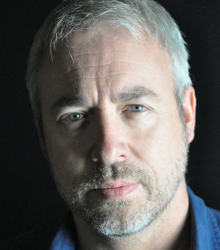
Harley Street Expert | Founder & High Performance Coach
With two decades of experience helping couples out of crisis, Stephen the founder of The Marriage Breakthrough Program, uses his proven system for rescuing and rebuilding relationships on the edge of divorce. A trusted advisor to CEOs, entrepreneurs, and industry leaders globally, his work blends emotional intelligence with strategic clarity. Known for navigating highly complex relationship challenges, Stephen helps individuals and couples find clarity and direction when everything is at stake.
Find out more >>> The Marriage Breakthrough Program
- “I Had Never Felt So Right… And Then So Ashamed.” - October 2, 2026
- I’m launching the Marriage Pattern AI soon. - September 28, 2026
- How Can a Marriage Feel Secure and Still Feel Passionate? - September 26, 2026