
Most Couples Are Solving the Wrong Problem Without Realising
For years, James and Rebecca believed they had a communication problem.
Every difficult conversation ended in frustration.
James felt as though nothing he said was ever understood.
Rebecca felt as though nothing she felt was ever acknowledged.
The more they talked, the worse things became.
Eventually they reached the conclusion that millions of couples reach every year.
“We just can’t communicate.”
It seemed obvious.
Friends agreed.
Relationship books agreed.
Even previous counselling had focused almost entirely on helping them communicate more effectively.
Yet despite trying every technique they were given, nothing really changed.
Because communication wasn’t the problem.
The diagnosis was wrong.
The Great Misunderstanding
Most couples don’t suffer because they can’t communicate.
They suffer because they can’t accurately translate each other’s communication.
Those might sound like the same thing.
They’re not.
James wasn’t struggling to explain himself.
Rebecca wasn’t struggling to express her emotions.
Both were communicating constantly.
The problem was that every sentence passed through two completely different internal worlds before it was understood.
The words arriving weren’t the words that had been spoken.
They had been translated.
Unfortunately, they were being translated incorrectly.
One Conversation. Two Completely Different Meanings.
One evening James said,
“I’ll sort it out.”
He meant:
“I love you. Let me carry this. I want to make things better.”
Rebecca heard:
“He’s shutting me down and doesn’t want to talk about it.”
Another day Rebecca asked,
“Can we talk?”
She meant:
“I need to be connected to you right now so you know how I feel – this is how I feel safe with you.”
James heard:
“You’re about to tell me everything I’ve done wrong.”
On another occasion James became quiet.
His intention was simple.
He was trying to stop himself saying something he’d regret.
Rebecca interpreted his silence completely differently.
“He doesn’t care.”
Three conversations.
Six completely different experiences.
Neither person was dishonest.
Neither person was irrational.
Each was translating the other through years of personal experience, emotional needs, protective patterns and deeply held beliefs about relationships.
The conversation itself wasn’t creating the conflict.
The meaning each person attached to it was.
Why Better Communication Didn’t Help
Like so many successful couples, James and Rebecca worked incredibly hard.
They scheduled date nights.
They promised to listen better.
They agreed not to interrupt.
They read books.
They watched videos.
They apologised.
They tried saying things differently.
Nothing lasted.
Because they were polishing the delivery while misunderstanding the message.
It’s a little like speaking perfect English to someone who only understands Spanish.
You can become more articulate.
You can speak more slowly.
You can choose kinder words or say them louder.
But until someone translates the language, you’ll still misunderstand each other.
Many marriages work exactly the same way.
Learning a New Language
Our work together wasn’t about teaching clever communication techniques.
It began by helping each of them understand the emotional language they had been speaking for years without ever realising it.
James discovered that solving problems was how he lived in his world and was part of how he expressed his care.
Rebecca discovered that sharing emotion was how she experienced love and connection.
Neither approach was wrong.
They were simply different.
More importantly, they learned that every criticism, withdrawal, suggestion or emotional reaction usually had another message hiding underneath it.
Instead of reacting to the words, they learned to become curious about the meaning.
One simple question began changing everything:
“What is my partner really trying to tell me?”
That question slowed down assumptions.
It softened defensiveness.
It replaced certainty with curiosity.
The Moment Everything Changed
The breakthrough didn’t happen during a dramatic session.
It happened over something completely ordinary.
Rebecca became upset because James had forgotten something important to her.
Previously, he would have defended himself.
He would have explained why he was busy.
This time he paused.
Instead of responding to her words, he asked himself what those words might actually mean.
He realised she wasn’t really talking about the forgotten task.
She was asking a much deeper question.
“Do I still matter to you?”
His response changed completely.
Not because he’d learned a better sentence.
Because he’d finally understood the question she was really asking.
Rebecca noticed immediately.
For the first time in years, she felt understood instead of managed.
James, meanwhile, discovered something equally important.
Her frustration had never been an attack on him.
It had been an attempt to reconnect to him.
One moment.
One different interpretation.
A completely different outcome.
The Results
Over the following weeks, arguments became shorter and less frequent.
Not because they suddenly agreed on everything.
Because they stopped assuming the worst about each other’s intentions.
James no longer experienced every emotional conversation as criticism.
Rebecca no longer experienced every practical response as emotional distance.
They had begun speaking the same emotional language.
The atmosphere at home became calmer.
Their children noticed.
Their relationship became lighter.
Most importantly, they stopped asking,
“How can we communicate better?”
Instead they asked,
“What is my partner trying to tell me that I’m not yet hearing?”
That single shift transformed the quality of every important conversation they had.
The Lesson
If you’ve convinced yourself that your marriage has a communication problem, you may be right.
But not for the reason you think.
Communication isn’t just about speaking.
It’s about meaning.
Every word your partner says passes through your own history, fears, needs, values and expectations before you decide what it means to you.
If your translation is wrong, your response will almost certainly be wrong too.
The goal isn’t simply to become a better communicator.
It’s to become a better translator.
Because when couples finally understand what their partner has been trying to say all along, conversations stop becoming battles to win.
They become opportunities to understand.
And that is where marriages begin to change.
Could This Be Your Marriage?
- Do you leave conversations feeling as though your partner has completely misunderstood you?
- Do you find yourself thinking, “That’s not what I meant at all”?
- Do the same arguments keep repeating, even though you’re both trying?
If so, the problem may not be that you’re speaking the wrong words.
It may be that you’re both translating them differently.
Understanding that difference is often the first step towards changing everything.
If you recognise your own relationship in this story, the Free Strategy Call is designed to uncover the hidden patterns shaping your conversations and help you understand what is really happening beneath the words.
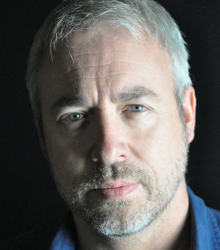
Harley Street Expert | Founder & High Performance Coach
With two decades of experience helping couples out of crisis, Stephen the founder of The Marriage Breakthrough Program, uses his proven system for rescuing and rebuilding relationships on the edge of divorce. A trusted advisor to CEOs, entrepreneurs, and industry leaders globally, his work blends emotional intelligence with strategic clarity. Known for navigating highly complex relationship challenges, Stephen helps individuals and couples find clarity and direction when everything is at stake.
Find out more >>> The Marriage Breakthrough Program
- The Relationship You Have With Yourself Determines the Partner You Become - August 24, 2026
- You’re Going Round in Circles for a Reason - August 21, 2026
- By the Time He Realises His Marriage Is in Crisis, She May Have Been Drowning for Years - August 18, 2026