
Quick Summary
Clients
Oliver, 52, founder of a property investment business
Helen, 49, senior barrister
Challenge
Helen discovered Oliver had been having an affair. She wanted every detail. He wanted the pain to stop. Both feared the marriage was over.
Time Together
12 weeks
Outcome
The affair ended. Oliver took full responsibility. Helen stopped searching for safety only in the details. Together, they understood how their marriage had become vulnerable and learned how to protect it differently.
The Situation
When Helen found the messages, her world collapsed.
Oliver had been having an affair.
They had been married for twenty-one years, had two children and a life that looked successful from the outside.
But none of that mattered when she saw the truth.
The discovery was volcanic.
Helen wanted answers.
Where did it start? How long had it been going on? Did you love her? What did she give you that I didn’t? Was any of our marriage real?
Every answer created another question. Every detail created another image. Every image created more pain.
Oliver ended the affair immediately. He apologised repeatedly. He said he loved Helen and wanted the marriage to survive.
But nothing he said made her feel safe.
Helen thought, “How could you?”
Oliver thought, “How do I make this stop?”
They both wanted the marriage to survive.
But she wanted certainty, he wanted relief, and neither understood what safety actually required.
The Hidden Problem
At first, both believed the affair was the problem.
Of course they did.
The affair was the betrayal. It was the explosion. It was the reason Helen could barely function.
And Oliver was fully responsible for the choice he had made.
There was no excusing it and no shifting responsibility onto Helen, stress or the marriage.
Oliver had crossed a line and broken trust.
But if all their attention stayed on the affair, they were going to miss the deeper issue.
Helen believed that if she collected every detail, eventually she would feel safe again.
This is natural. After betrayal, the mind searches for information because information feels like protection.
She was asking because she never wanted to be blindsided again.
But the painful truth was this:
The details of the affair could help explain the past, but they could not make her feel safe about the future.
Helen did not only need to know what Oliver had done.
She needed to understand how their marriage had become vulnerable enough for it to happen.
Oliver did not only need to apologise.
He needed to understand the version of himself that had become capable of betraying the marriage he still wanted.
Beneath all of Helen’s questions was one deeper question:
“How will I ever trust him again – how do I know this will never happen again?”
That answer could not be found in the affair alone.
It had to be found in the relationship that existed before it.
Why Previous Attempts Failed
Before seeking help, Oliver and Helen were stuck in a painful loop.
Helen believed the next answer would make her feel safe. Oliver believed the next apology would make the pain stop. Both were trying to protect themselves, but neither was addressing the real problem…
So the cycle started again.
They were not failing because they didn’t care.
Helen became obsessed with looking for all the gory details.
Oliver was looking for safety by trying to make the upset go away so it looked like he was hiding information.
Neither approach could work.
They both needed to understand how their marriage had become so unsafe before the affair.
The Breakthrough
The breakthrough came when they stopped making the affair the only focus.
That does not mean the affair was ignored.
Oliver had to be honest, take responsibility and stop asking Helen to let go and move on.
They had to look at the relationship that existed before it.
Oliver had grown up in a home where conflict felt dangerous. He learned to stay calm, avoid upsetting people and carry pressure alone. That pattern helped him succeed in business, but in marriage it became emotional withdrawal.
When Oliver felt criticised, ashamed or overwhelmed, he disappeared emotionally.
Helen had grown up with different protection. Love had often felt inconsistent, so she became highly alert to emotional distance. In marriage, that became hyper-vigilance.
The more Helen pursued, the more Oliver withdrew. The more Oliver withdrew, the more abandoned Helen felt. The more abandoned Helen felt, the more she demanded certainty. The more certainty she demanded, the more Oliver shut down.
Oliver thought he was avoiding conflict unaware he was creating more. Helen experienced it as abandonment. Helen thought she was trying to get close unaware of how Olivers emotional system was different. So Oliver experienced it as attack.
Their self-protection over years had been widening the gap between them.
Over time, that gap had made the marriage vulnerable to deeper problems.
This was the turning point neither person saw:
The affair was not the beginning of the disconnection. It was the moment their disconnection became impossible to ignore.
Neither was aware of something hidden…
The Part of Himself He Had Taken Elsewhere
As the work deepened, Oliver began to see something painful has he couldn’t explain why a man that didn’t want to lose his marriage would risk an affair.
His behaviour didn’t match his understand of who he was.
He discovered the affair had not really been about the other woman at all.
That was naturally hard for Helen to hear, because from her side it felt entirely about her: the secrecy, the messages, the comparison, the humiliation.
But Oliver realised he had not fallen for a better person.
He had actaully become attached to a different experience of himself.
With the other woman, he felt lighter, wanted, admired and unburdened – he became playful, fun
That did not make the affair acceptable.
It made the wound clearer: Oliver had taken a lost part of himself outside the marriage instead of bringing that truth to Helen.
He had not said, “I feel lost.”
He had not said, “I miss feeling wanted, not just needed.”
Instead, he escaped.
That was his responsibility.
That was the betrayal.
But now they could see something deeper.
The affair was not simply about another person.
It was about a part of Oliver that no longer felt safe to emerge inside the marriage.
Helen began to realise Oliver was not the only one who had disappeared.
She had lost parts of herself too: the softer part, the playful part, the trusting part, the woman who wanted to be cherished, not simply respected.
Oliver had become useful.
Helen had become strong.
But neither felt fully known.
The Process
The breakthrough wasn’t simply understanding their childhood patterns.
It was learning how those patterns had been translating each other’s behaviour for years.
Helen discovered she had rarely been reacting to Oliver’s behaviour alone.
She had been reacting to what her fear believed his behaviour meant.
When Oliver became quiet, her fear translated it as rejection.
When he became distracted, her fear translated it as disinterest.
When he became overwhelmed, her fear translated it as abandonment.
Oliver made similar discoveries.
When Helen asked questions, he didn’t hear fear.
He heard criticism.
When she became emotional, he heard failure.
When she became persistent, he heard control.
Neither of them had been responding to each other.
They had been responding to the fearful stories they were unconsciously creating about each other.
Once they understood this, something remarkable happened.
They no longer asked,
“Why did you do that?”
They became curious instead.
“What else could that behaviour mean?”
Fear stopped being the translator.
Curiosity took its place.
That one change transformed the emotional atmosphere of the marriage.
Not because either of them behaved perfectly.
But because they stopped assuming the worst about each other’s intentions.
Obstacles Along the Way
Progress was not linear.
Helen still had days when a memory, a date or a look on Oliver’s face brought everything back.
Oliver had moments where he wanted to defend himself and say, “I’m trying. Why can’t you see that?”
But he began to understand that Helen’s pain was not an inconvenience to move past.
It was the consequence of the rupture he had created and was part of the process.
His role was to become safe enough for her to move through it.
The Turning Point
The turning point came during a conversation that would previously have become another argument.
Helen had been triggered by a memory of a weekend when Oliver had lied about where he was.
Her old instinct was to interrogate.
Oliver’s old instinct was to defend.
But this time Helen paused and said:
“I want to ask you ten questions right now. But underneath that, I’m terrified I still don’t understand how you became capable of risking us.”
Oliver did not defend himself.
He said:
“You don’t just need details. You need to know that I understand the version of me that became dangerous to this marriage.”
Then he added:
“I don’t think it was really about her. I think I liked who I got to be there. And I hate that I took that outside our marriage instead of telling you I felt lost.”
That was the moment something shifted.
Not because the betrayal stopped hurting, but because the truth had become deeper.
Helen was no longer only hearing what had happened.
She was beginning to understand how it had happened.
Oliver was no longer hiding behind apology.
He was taking responsibility for the emotional path that had led him away.
The Outcome
Trust did not return overnight.
But clarity did.
Helen no longer believed safety would come from knowing every detail of the affair.
She understood that greater safety came from knowing how the marriage had become vulnerable and whether they now had the awareness to protect it.
Oliver became more emotionally present.
He stopped seeing silence as strength.
He stopped outsourcing aliveness.
Instead of taking the lighter, freer part of himself outside the marriage, he began learning how to bring that part home.
Helen became less trapped in interrogation and more able to express fear without becoming fierce first.
Their marriage became calmer, more honest and less performative.
They no longer saw the future as a blind gamble.
They understood the warning signs, their self-protection patterns and how emotional distance begins.
And because they understood it, they could protect it.
The Biggest Lesson
After an affair, it is natural to believe safety lives in the details: the timeline, the messages, the facts, the missing pieces.
Honesty matters. Accountability matters. Truth matters.
But lasting safety does not come from knowing every detail of the betrayal.
It comes from understanding how the relationship became vulnerable in the first place.
For many people, an affair is not really about the other person.
It is about connection to a part of themselves that no longer feels safe, welcome or possible inside the marriage.
That does not excuse betrayal.
It reveals the work they both need to understand and do.
Helen’s safety did not come from knowing everything about the affair.
It came from understanding how they got there and knowing they now had the awareness to avoid going back.
That is where real certainty begins.
Not in blind trust.
Not in endless reassurance.
Not in controlling another person.
But in knowing:
“We understand how this marriage became unsafe, and we know how to protect it now.”
Could This Be You?
After an affair, one more answer can feel like the thing that will finally make you safe.
That desire is natural.
But the deeper question may not be only:
“What happened?”
It may be:
“How did we become vulnerable?”
And:
“Do we both understand how to protect the marriage now?”
The future is not secured by promises alone.
It is secured by awareness, responsibility and emotional honesty.
Ready to Understand What Really Happened?
If you recognise yourself in Oliver and Helen’s story, your marriage may not need another circular argument.
It may need a deeper understanding of the hidden patterns that have been shaping your relationship for years.
The affair may be the crisis that brought everything to the surface.
But it may not be the whole story.
The real story may be how two people who loved each other became self-protected, unseen and emotionally unsafe.
And how they can learn to protect the relationship again.
Recognise Your Situation?
You may not need another circular argument. You may need a clearer understanding of what is really driving the breakdown.
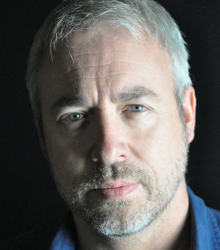
Harley Street Expert | Founder & High Performance Coach
With two decades of experience helping couples out of crisis, Stephen the founder of The Marriage Breakthrough Program, uses his proven system for rescuing and rebuilding relationships on the edge of divorce. A trusted advisor to CEOs, entrepreneurs, and industry leaders globally, his work blends emotional intelligence with strategic clarity. Known for navigating highly complex relationship challenges, Stephen helps individuals and couples find clarity and direction when everything is at stake.
Find out more >>> The Marriage Breakthrough Program
- A Marriage Dies From Thousands of Cuts - October 9, 2026
- We Can’t Solve Anything Without Making It Worse - October 6, 2026
- “I Had Never Felt So Right… And Then So Ashamed.” - October 2, 2026