
Why meaningful marriage work can begin with one person, even when their partner is reluctant
My typical clients CEOs, business owners and senior professionals are no different to most people, they are used to being the person others rely on.
So day-to-day they can hear difficult news without losing control. They can make decisions with incomplete information, manage disagreement and remain composed while other people become emotional.
That is why a marriage crisis can feel so exposing.
The same person who can steady a company may come home and be undone by one silence, one sigh or one unanswered question.
They push when they meant to give space.
They become cold when they wanted to remain loving.
They say something designed to hurt, then wonder why the person they love has become less open.
This does not mean they are fake.
Their marriage is simply touching fears that the rest of life may never reach.
And when those fears take over, they decide which version of that person enters and runs the relationship.
A marriage does not only reveal who someone’s partner is.
It reveals the relationship each person has with themselves.
This Is Not About “Self-Love”
The relationship someone has with themselves is not simply about confidence, self-care or enjoying their own company.
It is about self-trust – it’s about become someone you are proud to be and present.
Can they hear something painful without becoming cruel?
Can they tolerate uncertainty without forcing their partner to provide an immediate answer?
Can they remain loving without giving up their dignity?
Can they hold a boundary without using it to punish?
Can they respond today in a way they will still respect tomorrow?
Self-trust does not mean believing that everything will be fine.
It means knowing that fear will not be allowed to decide who they become.
When Support Becomes Emotional Outsourcing
A healthy marriage should include support.
Partners should comfort one another. They should care about each other’s feelings. They should offer reassurance, warmth and practical help.
The problem is not needing a partner.
The problem begins when someone needs their partner to behave in a particular way before they can remain connected to their own values.
The private bargain may sound like this:
I can be calm when you reassure me.
I can be warm when you become affectionate.
I can listen when you stop criticising me.
I can become the partner I want to be when you finally become the partner I need.
The other person is no longer being asked only to contribute to the relationship.
They are being asked to keep their partner calm, secure, hopeful and loving.
There is an important difference between:
Your support matters deeply to me.
and:
Unless you support me in the right way, I cannot remain the person I want to be.
In the first, a partner contributes to someone’s emotional life.
In the second, the partner becomes responsible for it – which over time is exhausting.
No human being can perform that role consistently.
So the person who needs the right response may begin trying to manage the person who must provide it.
They ask the same question again.
Push for reassurance.
Demand a decision.
Become angry when their partner needs space.
This may not happen because they are controlling by nature.
It may happen because they do not trust how they will cope if their partner does not provide the answer they need.
Signs Fear May Be Choosing the Partner Someone Becomes
Fear may be taking control when someone:
- needs their partner to respond correctly before they can remain calm;
- replays an argument long after it has ended and continues building the case;
- tests their partner’s love rather than naming what they are frightened of;
- gives space only to make the partner miss them or reconsider;
- uses withdrawal, silence or a boundary to punish;
- behaves lovingly while closely monitoring whether the behaviour produces the desired response.
None of these automatically makes someone a bad partner.
They may be attempts to protect against rejection, betrayal, humiliation or loss.
But protection can still damage the relationship it is trying to save.
Fear Tells a Fast Story
Fear rarely says:
I am frightened, so I am about to make an assumption.
It sounds far more certain.
One partner becomes quiet.
That is what happened.
The other person’s mind quickly adds a story:
They do not care.
They are shutting me out.
They have already decided to leave.
The story gives the silence a meaning.
The meaning creates fear, anger or rejection.
That emotional state then affects the behaviour.
The frightened partner questions, pushes, criticises, withdraws or demands reassurance.
The quiet partner does not directly experience the fear beneath that behaviour.
They experience pressure, anger, coldness or control.
They form their own judgement and begin protecting themselves.
Their protection then becomes new evidence for the first person:
I knew they did not care.
Consider a familiar pattern.
A husband notices that his wife has become quiet after dinner and decides the silence means she has emotionally left the marriage. He presses her for reassurance. She experiences the pressure as proof that she cannot be uncertain or honest around him, so she withdraws further.
He sees more evidence that she no longer cares.
She sees more evidence that honesty with him is unsafe.
Neither person needs to be deliberately trying to hurt the other.
Fear has simply chosen the partner each of them becomes.
This is how two people can become very good at protecting themselves while damaging the relationship they are trying to protect.
The Fastest Reaction Is Not Always the Truest Self
An angry, frightened or withdrawn response can feel completely authentic.
It appears quickly.
It may have helped the person protect themselves for many years.
But automatic does not always mean true.
The work is not about manufacturing a polished new personality.
It is not pretending to feel calm.
It is not hiding anger or denying pain.
The person someone wants to become may already be there.
Fear is simply making that person difficult to reach when it matters most.
Integrity is being your true self with fear no longer in charge.
Fear may still be present.
But it does not have to choose the behaviour.
Hurt may still be real.
But hurt does not have to become permission to hurt someone else.
Uncertainty may remain.
But it does not have to become an emergency that another person must solve.
A self-trusting person can say:
“I do not know what you will do, but I know who I choose to be while I find out.”
Trusting a Partner and Trusting Yourself Are Different
Trust in a partner asks:
Will this person tell the truth?
Will they honour their agreements?
Will they respect boundaries?
Will they take responsibility when they cause harm?
Will their changed behaviour last?
That trust must be earned through repeated behaviour.
Not through one promise.
Not through one emotional conversation.
Not through one good week.
Self-trust asks a different question:
Can I rely on myself while I discover whether my partner is trustworthy?
Someone may not know what their partner will do next.
They can still trust themselves to examine the evidence, ask honest questions, hold clear boundaries and behave in a way that reflects their values.
Self-trust is not the belief that nothing painful will happen.
It is the belief:
Whatever happens, I will not abandon myself.
Sometimes that may lead to patience and curiosity.
Sometimes it may lead to a firm boundary.
Where there is violence, abuse, intimidation, active addiction or serious danger, it may lead to specialist support or leaving.
Integrity does not mean being endlessly nice.
It means responding in a way that respects personal values, dignity and reality.
Relational trust is earned through the partner’s behaviour. Self-trust is demonstrated through one’s own.
Nobody Can Make Their Partner Happy
Each person is responsible for their own happiness.
A partner cannot create another person’s identity, purpose or emotional wellbeing for them.
But that does not mean people have no responsibility for how their partner experiences the relationship.
Each person helps create the emotional environment in which both people live.
They help determine whether truth is welcomed or punished.
Whether disagreement is allowed.
Whether boundaries are respected.
Whether uncertainty can be expressed without being forced into reassurance.
Whether a partner can have interests, friendships and happiness without having to manage the other person’s insecurity.
The distinction is important:
A person is not responsible for their partner’s happiness. They are responsible for whether the environment they create allows their partner to be happy.
That does not mean keeping a partner comfortable all the time.
Truth can be uncomfortable.
A boundary may disappoint.
Taking responsibility can hurt.
A relationship that allows happiness is not a relationship without discomfort.
It is a relationship in which neither person has to surrender truth, dignity, freedom or identity in order to remain connected.
What Is It Like to Be in a Relationship With Me?
A person’s basic worth is never in question.
Nobody needs to become good enough to deserve love.
Being a valuable partner means something different.
It means looking honestly at the experience being created for the other person.
Can the partner tell the truth?
Can they disagree?
Can they maintain boundaries?
Can they remain an individual?
Can they be happy without becoming responsible for the other person’s unhappiness?
Can they bring warmth, humour, affection and honesty into the relationship without needing to protect those parts of themselves?
An effective partner cannot guarantee that the other person will flourish.
But they can create conditions in which the other person has more freedom to bring their best.
The question is not only:
Is my partner meeting my needs?
It is also:
Am I becoming someone my partner can be successful with?
Both questions matter.
A healthy marriage does not require either person to ignore what they need.
But a relationship cannot survive as a permanent account of who is giving more and who is receiving less – remember a marriage is not a 50/50 deal. It’s a 100/100 as this is the safest for longevity.
Relationships also depend upon contribution.
Love, Growth and Courage
Three values can organise that contribution.
Love asks:
What do I choose to contribute to the person I say I love?
Not:
What must they give me before I become loving?
Love does not mean accepting poor treatment. A clear boundary can be loving. An uncomfortable truth can be loving.
Growth asks:
Who am I becoming through this difficult period?
Is the person becoming more controlling, dependent, angry and closed?
Or more honest, self-trusting, curious and capable?
Courage asks:
Can I remain that person when I cannot control what I will receive in return?
It is easy to be warm when warmth is guaranteed.
Courage is remaining aligned when the future is unclear and the truth may be painful.
Love guides the contribution.
Growth develops the person making it.
Courage keeps that person available when there is no promise of a particular result.
Why I Begin With Individuals
This is why I do not begin by asking two people in self-protection with stacked resentments to put their heads down and fix their marriage.
If each person still needs the other to manage their emotional state, joint conversations can quickly become another argument about who must move first.
I will soften when you soften.
I will listen when you stop attacking.
I will become loving when I feel loved.
Each statement may feel fair.
Together, they create a stand-off.
The first work is helping each person become someone they can rely on.
Someone who can separate what happened from what fear says it means.
Someone who can remain connected to their values under pressure.
Someone who can contribute without trying to control the result.
Someone who can hold a boundary without using it to punish.
Only then can couples work begin moving from:
Me against you
to:
Us against the problem.
The Work Can Begin With One Person
Often, only one person is ready to begin.
That does not make the work pointless.
Nor does it make that person responsible for saving the marriage.
A relationship is an interaction. When one person genuinely changes what they bring into it, the other person is no longer responding to exactly the same experience.
If pursuit stops, the partner can no longer withdraw from the same pursuit.
If prosecution stops, the partner can no longer defend against the same attack.
If honesty is no longer punished, telling the truth carries a different emotional cost.
The partner must now respond to a different relationship.
But the direction of that response remains theirs.
They may become warmer or more open.
They may remain suspicious.
They may move further away.
They may become clearer that they do not want the relationship.
The outcome cannot be controlled.
But new evidence becomes available.
One person can change the relationship. Two people decide whether they want to build the relationship that becomes possible.
This is why individual marriage work does not have to wait until both people are ready – I see so many people wait so long they miss their chance.
So the process can begin with the person who is willing to start.
The purpose is not to teach them how to tolerate an unhappy marriage.
It is to help them understand what fear is bringing out in them, rebuild self-trust and become more capable of responding with integrity under pressure.
Their partner remains responsible for their own behaviour and their own decision.
But they must now respond to a different relational environment.
That response begins to show what the marriage may—or may not—be capable of becoming.
The Mission Is Not Marriage at Any Cost
This work is not about becoming so good that a partner has to stay.
That would turn personal growth into another attempt to control the outcome.
A person becomes more effective because they want to become someone they respect.
The relationship can then reveal what two more effective people are able to create.
Perhaps greater self-trust creates greater safety.
Greater safety allows more honesty.
Honesty allows warmth, trust and emotional connection to grow.
Or better conditions may reveal that the two people do not want the same future.
Neither answer should be forced in advance.
The mission is two happy people.
Not one intact marriage at any cost.
A Clear Next Step
An article can explain this principle.
It cannot identify which fears are controlling a particular person, what those fears are protecting or what an aligned response should look like in the moments where they normally lose themselves.
It also cannot establish what a partner’s response is genuinely showing about the future of the marriage.
That requires understanding the individual, the process between the couple and the condition that process has created.
This work does not have to wait until both people are ready.
I often begin one-to-one with the person who is willing to start.
Not because they are solely responsible for the marriage.
Not to teach them to tolerate an unhappy relationship.
And not to persuade them either to stay or to leave.
The work is to help them become someone they can rely on, change what they contribute to the relationship and create clearer evidence of what the marriage is capable of.
Remember your partner has built a profile of who they think you are, and any fears or distortion presented consistently will have given them a profile of your fears not who you really are.
Presenting who you really are minus the your fears is one of the most important steps, there are more to learn of course.
That is the purpose of The Marriage Breakthrough Intensive.
If this article describes something you recognise, a confidential consultation is the next sensible step. It is an opportunity to explore what is happening in your marriage, whether The Marriage Breakthrough is appropriate for your situation and what a responsible first step could look like.
You do not need to persuade your partner to attend before beginning.
Book a confidential consultation to explore The Marriage Breakthrough Intensive.
The relationship you have with yourself determines the partner you become—and the emotional environment the person you love has to live inside.
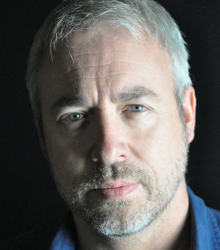
Harley Street Expert | Founder & High Performance Coach
With two decades of experience helping couples out of crisis, Stephen the founder of The Marriage Breakthrough Program, uses his proven system for rescuing and rebuilding relationships on the edge of divorce. A trusted advisor to CEOs, entrepreneurs, and industry leaders globally, his work blends emotional intelligence with strategic clarity. Known for navigating highly complex relationship challenges, Stephen helps individuals and couples find clarity and direction when everything is at stake.
Find out more >>> The Marriage Breakthrough Program
- She Was Certain Divorce Was the Answer. Then the Same Problem Appeared in Her Next Relationship. - October 17, 2026
- Why Do We Keep Creating a Relationship Neither of Us Wants? - October 15, 2026
- Are You Making Things Better or Worse in Your Marriage? - October 11, 2026